Analysis · Regulation
CFTC sues Arkansas to halt its Kalshi case at once
The complaint asks a judge to block the state's Kalshi case immediately and bar enforcement against CFTC-regulated exchanges. No motion or ruling is on record yet.
By Phil6 min read
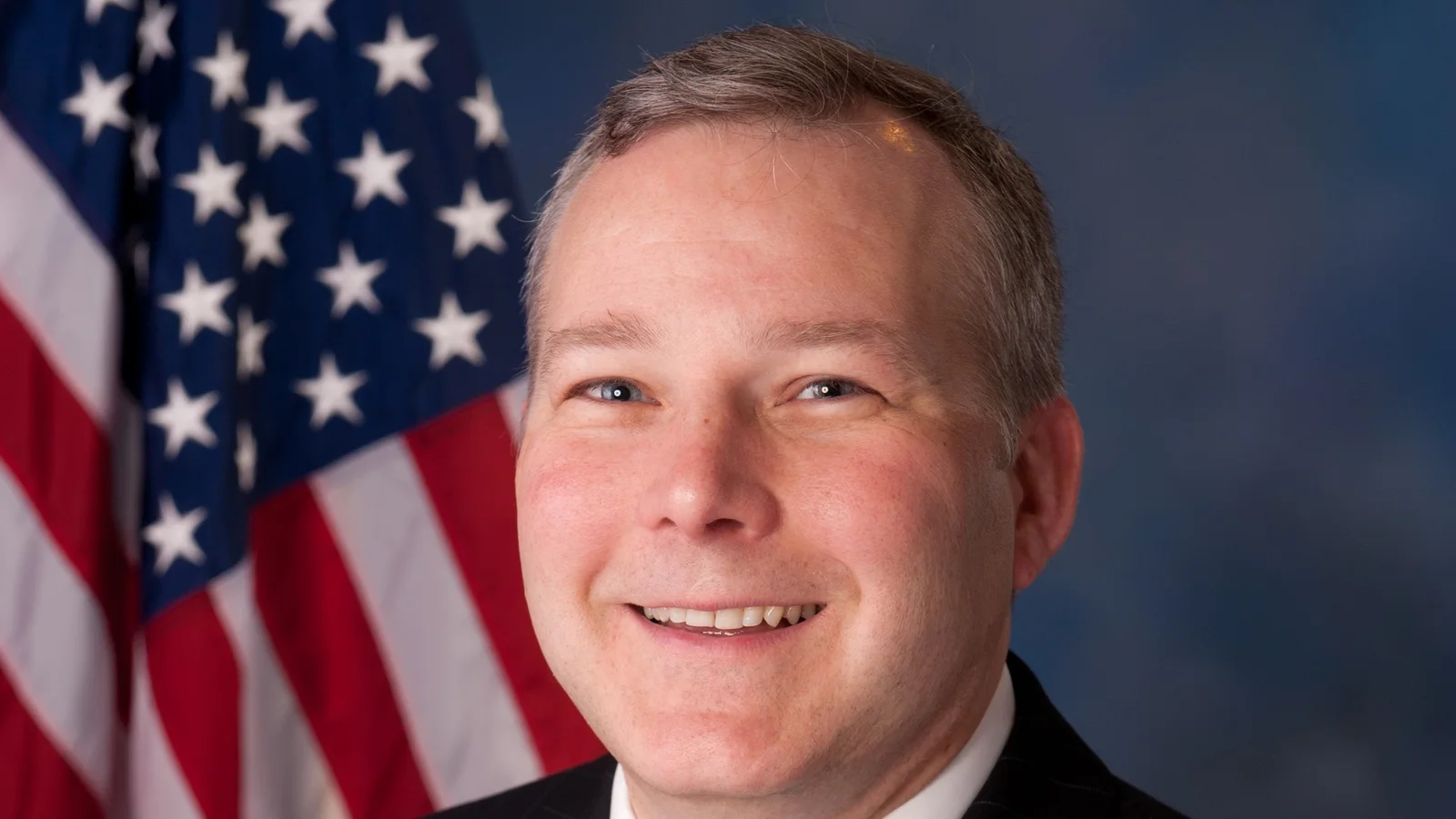
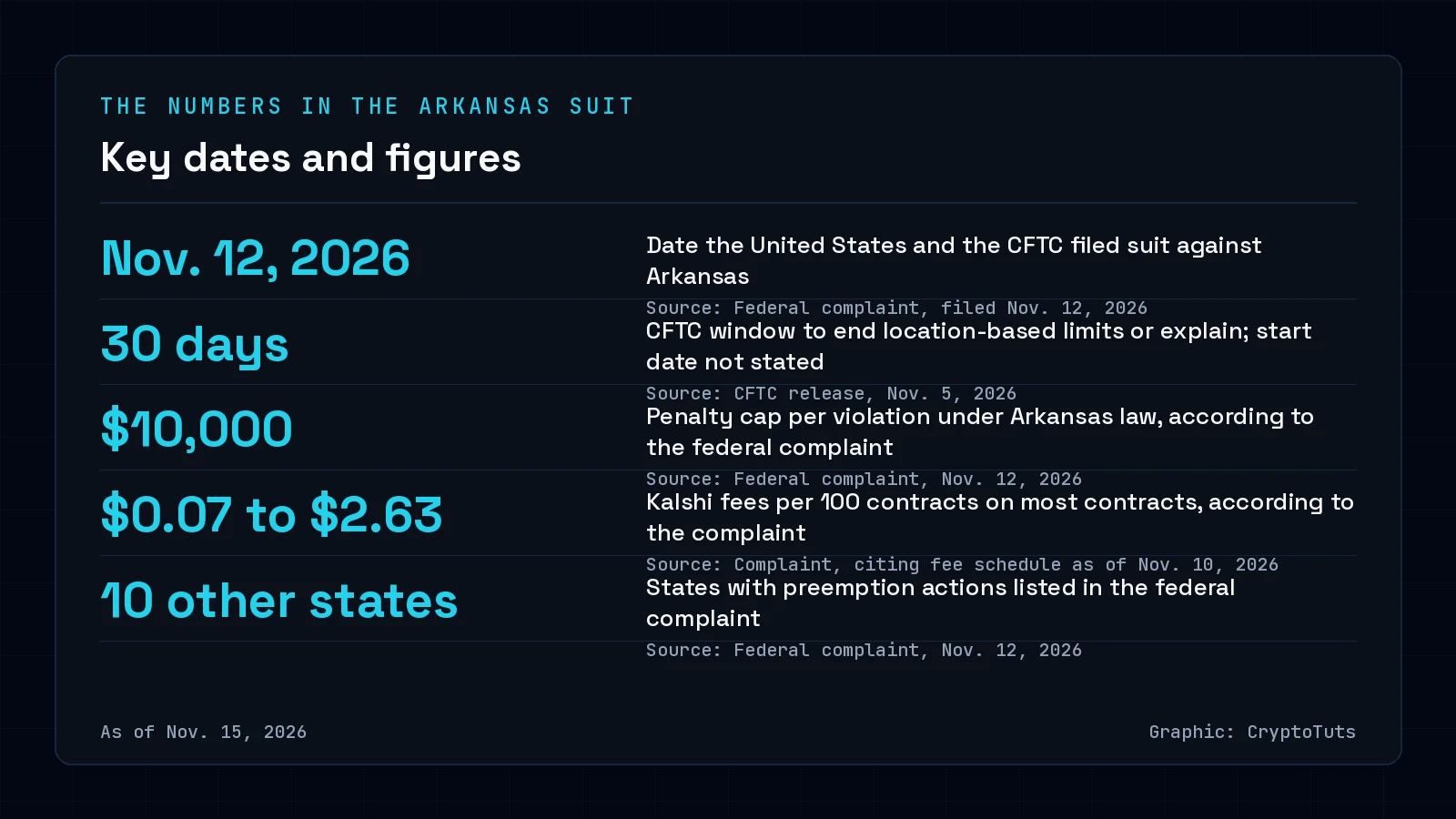
The United States and the CFTC have asked a federal judge to halt Arkansas's case against Kalshi at once. Their federal complaint against Arkansas and Attorney General Tim Griffin was filed Nov. 12, 2026 (Case 4:26-cv-01255-BSM). No motion or ruling is on record. On Nov. 5, the CFTC told regulated exchanges to end location-based limits that violate its impartial access rules within 30 days, or explain why they cannot.
Event contracts are yes-or-no contracts that pay out depending on whether a stated event happens, such as an election result. For anyone who trades them from Arkansas, Washington now presses on two tracks: a lawsuit against one state and guidance against walling off any state. The suit reaches past Kalshi. It seeks a preliminary and then permanent injunction barring Arkansas from investigating CFTC-regulated exchanges or enforcing state law against trades on them.
Federal guidance tells exchanges not to wall off states
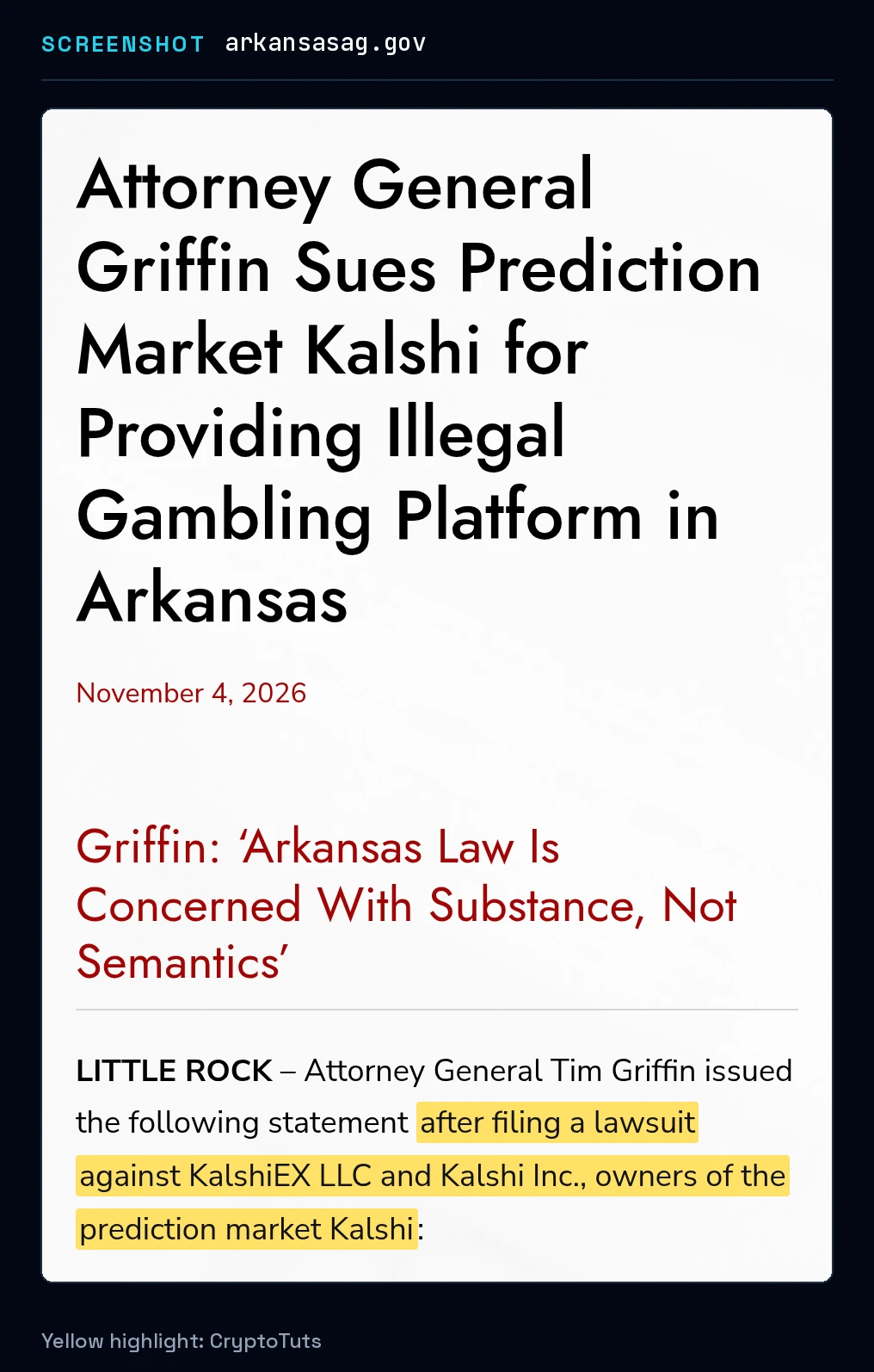
Three dates frame the dispute. Arkansas sued Kalshi on Nov. 4, 2026, and the CFTC issued its impartial access interpretation the next day. The federal complaint followed on Nov. 12, eight days after the state suit.
The interpretation covers designated contract markets, or DCMs. A DCM is an exchange the CFTC has approved to list futures and similar contracts, the derivatives counterpart of a stock exchange. The CFTC designated Kalshi as a contract market by order dated Nov. 3, 2020.
The text appeared in the Federal Register at 91 FR 72407 and took effect Nov. 10. In it, the CFTC sets out its reading of the Commodity Exchange Act and its rules as interpretive guidance. A DCM generally may not limit access based on an otherwise eligible participant's location within the United States. Chairman Michael S. Selig voted in favor, and the voting summary lists no commissioner against.
The complaint ties that view to Arkansas. It argues that state enforcement would force exchanges to break the impartial access rule by denying event contracts to Arkansas residents.
The suit seeks to override Arkansas law
The United States sues as a named plaintiff beside the CFTC. The signature block lists Justice Department lawyer Timothy J. Borgerson, counsel to the assistant attorney general, for the United States. CFTC General Counsel's office lawyers appear for the agency, and KalshiEX LLC is described as a non-party.
The first request is a declaration that Arkansas laws are preempted, unconstitutional and invalid as applied to contracts on CFTC-regulated DCMs. Preemption is the constitutional principle that valid federal law overrides conflicting state law. The requested injunction would also reach the state's agents and the exchanges' affiliates and partners.
The government wants speed. Preliminary relief, the complaint says, would preserve the status quo while the case runs. A preliminary injunction is an early court order that holds things in place until a final decision. The immediate block should also cover future enforcement actions or investigations against exchanges and related entities.
The legal theory underneath holds that the contracts Arkansas targets are swaps under the Commodity Exchange Act. Swaps are derivatives the act places under federal oversight. On that reading, federal law preempts Arkansas law for trading on CFTC-regulated exchanges in three ways: through the statute's text, by occupying the field and through direct conflict.
Arkansas calls the contracts illegal gambling
Arkansas sees the same contracts as gambling. Its suit in Independence County Circuit Court brings claims under the Arkansas Deceptive Trade Practices Act and for unjust enrichment. Griffin said in a release that Kalshi opened its platforms to Arkansas consumers as young as 18 without the licenses and tax payments required of lawful gambling operators.
The state seeks an injunction, restitution, damages, civil penalties and unpaid taxes, plus fees, costs and interest. Its filing, quoted in the federal complaint, alleges on information and belief that thousands of Arkansas residents opened Kalshi accounts and traded, some of them 18 to 20.
The federal complaint puts two figures side by side. Arkansas's deceptive trade law allows civil penalties of up to $10,000 per violation, and the state seeks penalties under it. Kalshi earns $0.07 to $2.63 in transaction fees per 100 contracts on most contracts, under its fee schedule as of Nov. 10, 2026. One ceiling penalty of $10,000 thus stands against at most $2.63 in fees on 100 contracts.
The complaint then projects that if Arkansas seeks penalties per violation, they would dwarf Kalshi's income from Arkansas and could reach hundreds of millions of dollars. That projection comes without a violation count or calculation.
The swap theory also cites a pending proposal
The complaint also cites rulemaking that is still in progress. It points to a joint CFTC and SEC proposal published Oct. 19, 2026, at 91 FR 66,022. The proposal would define event contracts on sports, politics, weather and culture as swaps. That definition is still a proposal, and if finalized it would give an independent basis to treat Arkansas's targets as swaps.
The rule for licensed operators is further along. An interim final rule from the same day, at 91 FR 65,969, excludes from the swap definition wagers offered by casinos or sportsbooks licensed under state or tribal law. Whether Kalshi's contracts count as swaps is the question the court has to answer.
By the filing's count, 30 U.S. exchanges hold active CFTC contract market designations. Some offer event contracts. If you trade on one of them from Arkansas, the swap question reaches you as well.
In a Nov. 13 release, CFTC Chairman Selig said Arkansas seeks to shut down event contracts. He pledged that the CFTC will defend what he called its sole jurisdiction over federally regulated markets against state interference.
Three other states saw early injunctions
The complaint names preemption actions involving 10 other states: Arizona, Connecticut, Illinois, Kentucky, Minnesota, New Mexico, New York, Rhode Island, Wisconsin and Utah. The Rhode Island case, KalshiEX LLC v. Furcolo, carries Kalshi's name in its caption. The CFTC counts Arkansas as the 11th state it has sued over prediction markets. It also cites amicus briefs in four federal appeals courts and one state supreme court.
The filing notes preliminary injunctions against state enforcement of gambling laws against CFTC-registered entities in Arizona, Illinois and Minnesota. Those are early orders, and the Arkansas judge decides on the Arkansas record.
For exchanges, the next marker is the CFTC's 30-day window.
Sources
- Complaint for Injunctive and Declaratory Relief, United States and CFTC v. Arkansas and Tim Griffin, Case 4:26-cv-01255-BSM (E.D. Ark.) · Commodity Futures Trading Commission
- CFTC press release 9325-26: CFTC Files Lawsuit Against Arkansas as the Agency Defends its Federal Jurisdiction Over Prediction Markets · Commodity Futures Trading Commission
- CFTC press release 9323-26: CFTC Issues Impartial Access Requirements Interpretation · Commodity Futures Trading Commission
- Federal Register: DCM Impartial Access Requirements, 91 FR 72407 (Nov. 10, 2026) · Office of the Federal Register
- Attorney General Griffin Sues Prediction Market Kalshi for Providing Illegal Gambling Platform in Arkansas · Arkansas Attorney General
About the author

Phil
Founder & Editor-in-Chief · In crypto since 2017
Phil is the founder of CryptoTuts and has explored Bitcoin, cryptocurrencies and blockchain technology since 2017. He explains complex topics clearly, with data and without empty promises.
- XRP and the XRPL
- Bitcoin
- Crypto tax records
- Exchange comparisons
- On-chain analysis